Future Ready Schools Start with Future Ready Infrastructure
Today’s school districts must support AI initiatives, digital learning, campus security, and growing connectivity demands while making every technology investment count.
Building future ready schools requires more than new devices and applications. It requires infrastructure designed to support innovation for decades.
Learn how districts are reducing infrastructure costs, improving efficiency, and creating a foundation for future growth.
Download the Richwood Academic Complex Case Study
What Makes a School Future Ready?
Future ready schools have infrastructure that can support evolving educational technology without requiring constant upgrades and costly rebuilds.
That means being prepared for:
– AI-enabled learning tools
– Digital curriculum and assessments
– Campus security and surveillance systems
– Smart building technologies
– Increasing device density
– Future applications that have yet to emerge
Future readiness is not about predicting the future. It’s about building an infrastructure foundation that can adapt as technology evolves.
The Infrastructure Challenge Facing School Districts
Technology expectations continue to rise while budgets remain under pressure.
Many districts are balancing:
– Aging infrastructure
– Rising energy costs
– Increasing bandwidth demands
– Limited capital budgets
– Ongoing technology refresh cycles
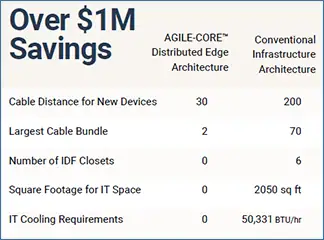
Traditional network designs often require additional telecommunications closets, increased cooling requirements, more power consumption, and costly infrastructure upgrades over time.
These expenses can impact the long-term return on technology investments.
Building Infrastructure for the Next 20+ Years
A growing number of districts are exploring new approaches to technology infrastructure that reduce complexity while improving long-term flexibility.
By rethinking how power, connectivity, and network resources are delivered throughout a facility, schools can:
– Reduce infrastructure requirements
– Improve operational efficiency
– Support future technology growth
– Simplify expansion projects
– Lower long-term ownership costs
The result is infrastructure designed to support both current needs and future innovation.
How Districts Are Improving Technology ROI
Every technology decision should contribute to long-term value.
Forward-thinking districts are evaluating infrastructure strategies that help:
Reduce Construction Costs
Minimize the space, power, and cooling requirements traditionally associated with network infrastructure.
Improve Energy Efficiency

Lower operational expenses through more efficient infrastructure design.
Increase Flexibility
Support future technologies without requiring significant infrastructure changes.
Extend Infrastructure Lifecycles
Create a technology foundation designed to evolve alongside district needs.
Maximize Taxpayer Investments
Improve the long-term return on technology spending by reducing future upgrade requirements.
Download the Richwood Academic Complex Case Study
Start the Conversation
Whether you’re planning a new school, renovating an existing facility, or evaluating future technology initiatives, the right infrastructure decisions today can create lasting value for years to come.
Learn more about distributed edge architecture.