Continuous Thermal Monitoring
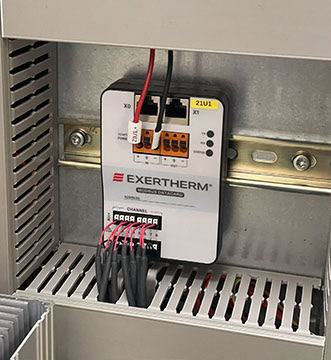
Detect Electrical Issues Before They Become Failures
Electrical failures rarely happen without warning. In many cases, excessive heat develops gradually at electrical connections long before an outage occurs. Continuous Thermal Monitoring (CTM) provides 24/7 visibility into the temperature of critical electrical assets, allowing maintenance teams to identify developing issues early, reduce unplanned downtime, improve safety, and support predictive maintenance programs.
Unlike periodic handheld infrared inspections that capture a single moment in time, CTM continuously monitors equipment, providing real-time alerts when abnormal temperature changes occur.
Request a Consultation | Download the CTM Guide
What is Continuous Thermal Monitoring (CTM)?
Continuous Thermal Monitoring (CTM) is a condition monitoring solution that continuously measures the temperature of critical electrical connections and equipment while systems remain energized and operating under normal load.
By monitoring temperature trends around the clock, CTM helps maintenance teams detect abnormal heat buildup that may indicate loose connections, overloaded circuits, deteriorating components, or other developing electrical issues before they result in equipment damage or unexpected downtime.
Rather than replacing traditional maintenance practices, CTM enhances predictive maintenance programs by providing continuous insight between scheduled inspections.
Continuous Thermal Monitoring vs. Handheld Infrared Inspections
| Handheld Infrared Inspections | Continuous Thermal Monitoring |
|---|---|
| Periodic inspections only | 24/7 continuous monitoring |
| Snapshot in time | Continuous temperature trending |
| Requires technicians onsite | Automated monitoring and alerts |
| Issues may develop between inspections | Detects changes as they occur |
| Limited historical data | Long-term trend analysis |
| Reactive scheduling | Supports predictive maintenance |
Handheld infrared inspections remain an important maintenance tool. Continuous Thermal Monitoring complements those inspections by providing visibility between scheduled maintenance intervals.
Benefits of Continuous Thermal Monitoring
Detect Developing Problems Earlier
Continuous monitoring identifies abnormal temperature changes that may indicate loose electrical connections, overloaded circuits, deteriorating components, or other developing faults before they impact operations.
Improve Electrical Reliability
Early detection allows maintenance teams to schedule repairs during planned maintenance windows rather than responding to unexpected equipment failures.
Enhance Personnel Safety
Identifying overheating electrical components before they escalate helps reduce the risk of equipment damage, electrical fires, arc flash incidents, and other hazardous conditions.
Support Predictive Maintenance
Continuous temperature data provides valuable insight into equipment performance over time, allowing maintenance teams to recognize trends and make informed maintenance decisions.
Reduce Maintenance Costs
Addressing issues before they become major failures helps reduce emergency repairs, equipment replacement costs, and unplanned downtime.
Improve Operational Visibility
Real-time monitoring and historical temperature trends provide greater visibility into the health of critical electrical infrastructure across multiple facilities.
Applications
Continuous Thermal Monitoring can be applied across a wide range of critical electrical infrastructure, including:
– Switchgear
– Motor Control Centers (MCCs)
– Busway systems
– UPS systems
– Power Distribution Units (PDUs)
– Transformers
– Electrical panels
– Critical distribution equipment
Industries That Benefit
Organizations across many industries rely on Continuous Thermal Monitoring to improve electrical reliability and support predictive maintenance initiatives.
Industries include:
– Data Centers
– Manufacturing
– Healthcare
– Government and Defense
– Utilities
– Higher Education
– Commercial Facilities
– Telecommunications
– Financial Services
Why Choose JEM Tech Group?
For nearly 50 years, JEM Tech Group has helped organizations improve the reliability, efficiency, and resiliency of mission-critical IT and electrical infrastructure.
As a vendor-neutral solutions provider, we work closely with customers to evaluate their environments, recommend the right technologies, and deliver complete implementation services, from planning and installation to ongoing support.
Whether you’re looking to enhance an existing maintenance program or improve visibility into critical electrical assets, our team can help you determine where Continuous Thermal Monitoring provides the greatest operational value.
Frequently Asked Questions
Does Continuous Thermal Monitoring replace handheld infrared inspections?
No. CTM complements handheld infrared inspections by providing continuous monitoring between scheduled inspections. Together, they create a more comprehensive predictive maintenance strategy.
What types of equipment should be monitored?
CTM is commonly used to monitor switchgear, motor control centers, transformers, UPS systems, busway, PDUs, electrical panels, and other mission-critical electrical infrastructure.
Can Continuous Thermal Monitoring be retrofitted?
Many CTM solutions can be installed on existing electrical equipment without requiring complete equipment replacement. The appropriate approach depends on the type and age of the equipment.
What are the benefits of continuous monitoring?
Continuous monitoring helps organizations detect developing issues earlier, reduce unplanned downtime, improve safety, extend equipment life, and make more informed maintenance decisions.
Ready to Improve Electrical Reliability?
Continuous Thermal Monitoring provides the visibility needed to identify developing electrical issues before they become costly failures.
Whether you’re enhancing an existing predictive maintenance program or evaluating new monitoring technologies, JEM Tech Group can help you determine the right approach for your facility.